


Por/By Jorge Ramos
Holland, Michigan. En este pueblito de apenas 35 mil habitantes pudiera estar la clave para saber quién va a ganar en las elecciones de este martes en Estados Unidos. Caminé la calle principal y no encontré a muchos latinos e inmigrantes. Pero apenas me asomé en los restaurantes y ahí estaban como siempre, controlando las cocinas y contando historias de la pizca de manzanas y arándanos que ellos levantan cada año. En otras palabras; no los ves pero se sienten.
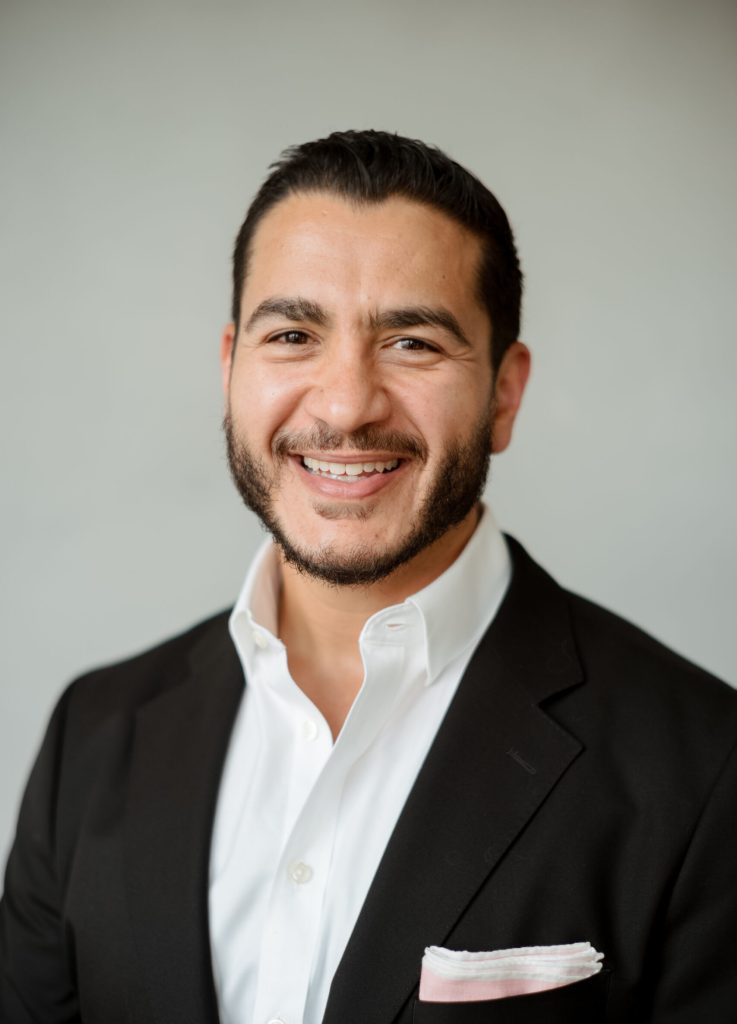
Viajé a Holland junto a mi hija Paola para entrevistar al candidato Demócrata, Abdul El-Sayed, quien busca convertirse en el primer musulmán en el senado de Estados Unidos. Como se imaginarán, toda la maquinaria ultraderechista se ha encargado de atacarlo y de presentarlo como un extranjero, a pesar de haber nacido en Estados Unidos de padres egipcios. El presidente Donald Trump lo ha acusado de ser un peligroso “yihadista” y el vicepresidente J.D. Vance le ha pedido que “se calle la boca y muestre gratitud” por Estados Unidos. Nada como tratar de hacerte sentir como un extraño en tu propio país.
Pero Abdul no se ha dejado picar por los insultos y ha seguido haciendo campaña, criticando el alto costo de vida y hablando de su deseo de abolir a la policía migratoria (ICE). Las encuestas[i], dentro del margen de error, le dan posibilidades de ganar ante su contrincante, el Republicano Mike Rogers. (Contactamos varias veces a su campaña para una entrevista aunque nunca nos contestaron.)
Paola y yo entrevistamos a Abdul (para nuestro podcast The Moment) en un auditorio donde había más de 1,500 personas. Aunque él viajó a Perú y Guatemala como estudiante de medicina, no se atrevió a pronunciar ni una sola palabra en español durante la plática. Ya veremos si su mensaje de affordability pegó. Pero si algunos de los hispanos que votaron por Trump en el 2024 ahora cambian de partido, el congreso y el país se podrían ver muy diferentes.
Los demócratas más optimistas están hablando de una ola azul para el martes e, incluso, hay los que se atreven a decir que se trataría de un tsunami. Pero lo que sí parece inevitable es que muchos hispanos que antes votaron por Trump hoy se sienten engañados y traicionados, y no van a salir a votar por su partido.
Aquí tengo algunos números.
Trump obtuvo el 44 por ciento del voto latino en el 2024 y ahora, en este 2026, solo tiene el apoyo del 31 por ciento, según la última encuesta del diario The New York Times.[ii] Hay todo un ejército de votantes hispanos que se sienten defraudados por el gobierno de Trump y ya no lo van a apoyar. No solo por la inflación (3.7%) y la interminable guerra contra Irán pero, sobre todo, por el trato inhumano y cruel de los agentes de ICE en contra de inmigrantes, de latinos y de personas que hablan inglés con acento. Es, en el fondo, una cuestión moral. ¿Cómo votar por el partido de un presidente que ha separado a miles de niños de sus padres y que ha permitido que sus agentes agredan y disparen contra inmigrantes?
Estamos en el fin de la era Trump.
Las encuestas sugieren que el partido Demócrata podría recuperar el control de la cámara de representantes y, si tiene una buena noche, también del senado. Pero basta con controlar una de las dos cámaras del congreso para detener las ideas más extremas de Trump y para investigar posibles casos de corrupción y de abuso de poder. Por ahí, los más optimistas, están flotando la idea de destituir al presidente. Aunque para esto se necesitaría que dos terceras partes del senado aprobaran su destitución y las matemáticas no dan para tanto.
El punto más alto en la carrera política de Trump ocurrió tras ganar las elecciones del 2024 y lograr su regreso a la Casa Blanca. Desde ahí impulsó una agenda muy conservadora -basada en aranceles y deportaciones- y que culminó con la captura del dictador venezolano, Nicolás Maduro, el 3 de enero de este año. Eso le hizo mucho daño a Trump. Se sintió todopoderoso, se inventó una guerra en Irán, se enlodó y no ha podido salir de ahí. La economía se ha deteriorado y los votantes, posiblemente, se lo cobren en estas elecciones.
Es cierto que siempre hemos subestimado a Trump y que tanto en el 2016 como en el 2024 nos sorprendió. Pero esta vez nos encontramos con un presidente que ha perdido el pulso del país y que en sus últimos discursos se la ha pasado hablando de los traseros de hombres y mujeres. Por ahora, lo único que espero de Trump es que, si pierde, lo reconozca. Aunque es, quizás, mucho pedir.
Mientras tanto, ya veremos si este pueblito de Michigan nos da la clave de la elección.
THE END OF THE TRUMP ERA
Holland, Michigan. In this small town of barely 35,000 inhabitants, the key to who will win this Tuesday’s U.S. election might just be found. I walked along the main street and didn’t see many Latinos or immigrants. But as soon as I peeked into the restaurants, there they were—as always—running the kitchens and sharing stories about the apple and blueberry harvests they bring in every year. In other words: you don’t see them, but their presence is felt.
I traveled to Holland with my daughter, Paola, to interview the Democratic candidate, Abdul El-Sayed, who is seeking to become the first Muslim in the U.S. Senate. As you might imagine, the entire far-right apparatus has made it a point to attack him, portraying him as a foreigner—despite the fact that he was born in the United States to Egyptian parents. President Donald Trump has accused him of being a dangerous “jihadist,” and Vice President J.D. Vance has told him to “shut his mouth and show some gratitude” toward the United States. Nothing quite like being made to feel like an outsider in your own country.
But Abdul hasn’t let the insults get to him; he has continued his campaign, criticizing the high cost of living and advocating for the abolition of the immigration enforcement agency, ICE. Polls—within the margin of error—suggest he has a chance of defeating his opponent, Republican Mike Rogers. (We reached out to Rogers’ campaign several times for an interview, but we never received a response.)
Paola and I interviewed Abdul (for our podcast, *The Moment*) in an auditorium packed with more than 1,500 people. Although he had traveled to Peru and Guatemala as a medical student, he didn’t utter a single word in Spanish during the conversation. We shall see whether his message regarding affordability resonated with voters. But if some of the Hispanics who voted for Trump in 2024 switch parties, Congress—and the country—could look very different.
The most optimistic Democrats are talking about a “blue wave” this Tuesday; some even go so far as to call it a “tsunami.” What seems certain, however, is that many Hispanics who previously voted for Trump now feel deceived and betrayed, and they will not be turning out to vote for his party.
Here are some figures:
Trump won 44 percent of the Latino vote in 2024, but now, in 2026, he has the support of only 31 percent, according to the latest poll from *The New York Times*. There is an entire army of Hispanic voters who feel let down by the Trump administration and will no longer support him—not just because of inflation (3.7%) and the endless war against Iran, but, above all, because of the cruel and inhumane treatment by ICE agents toward immigrants, Latinos, and people who speak English with an accent. At its core, this is a moral issue. How can one vote for the party of a president who has separated thousands of children from their parents and allowed his agents to assault and even shoot at immigrants?
We are witnessing the end of the Trump era.
Polls suggest that the Democratic Party could regain control of the House of Representatives—and, if they have a good night, the Senate as well. Controlling even one of the two chambers of Congress would be enough to halt Trump’s most extreme ideas and to investigate potential cases of corruption and abuse of power. Some of the more optimistic observers are even floating the idea of removing the president from office. However, that would require a two-thirds majority in the Senate—and the numbers simply don’t add up to that. The high point of Trump’s political career came after he won the 2024 election and secured his return to the White House. From there, he pushed a deeply conservative agenda—centered on tariffs and deportations—which culminated in the capture of Venezuelan dictator Nicolás Maduro on January 3rd of this year. That proved very damaging for Trump. He began to feel all-powerful, concocted a war in Iran, got himself mired in a mess, and has been unable to extricate himself. The economy has deteriorated, and voters may well make him pay for it in this election.
It is true that we have always underestimated Trump—he caught us by surprise in both 2016 and 2024. But this time, we are dealing with a president who has lost his pulse on the country; in his recent speeches, he has spent his time talking about the backsides of men and women. For now, the only thing I hope for from Trump is that, should he lose, he will acknowledge it—though that may be asking too much.
In the meantime, we shall see whether this small town in Michigan holds the key to the election.