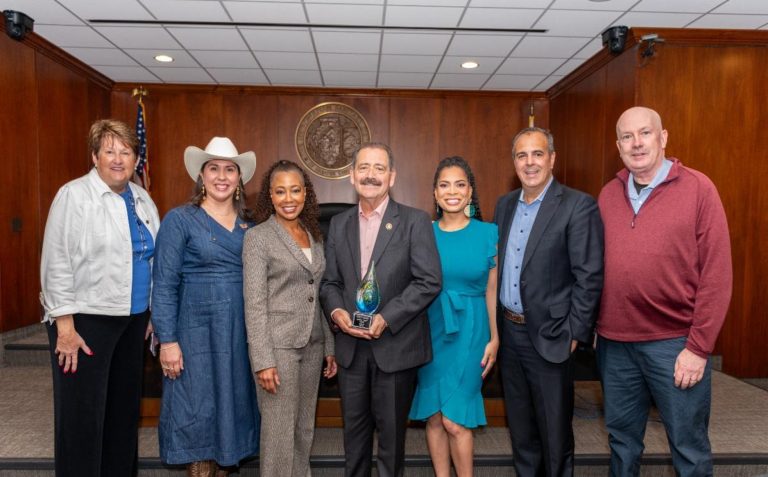

Springfield, Illinois (NED).— El 24 de septiembre, Kathy Cortez, Vicepresidenta de Asuntos y Defensa de la Liga de Mujeres Votantes de Illinois, participó en un panel para brindar su testimonio experto ante el Comité Electoral y de Ética de la Asamblea General de Illinois sobre la alineación de las elecciones locales con el ciclo electoral de noviembre y la ley ILGA HB 2718, “Ley para Facilitar el Voto de Todos los Ciudadanos Elegibles”.
Cortez señaló que la Liga de Mujeres Votantes aplaude al comité por su atención a la baja participación electoral en nuestras elecciones y por su disposición a examinar las medidas que el gobierno puede tomar para alentar a más ciudadanos de Illinois a participar. También señaló que la Liga de Mujeres Votantes no tiene una postura firme sobre ninguno de estos temas, ya que la baja participación electoral no tiene una causa única y, por lo tanto, no existe una solución única. Cortez argumentó que la idea del Voto Universal propuesta en la HB2718 tenía mérito, ya que, con el tiempo, podría crear una cultura del voto como un deber cívico, pero instó a la cautela sobre si este es el momento adecuado para aprobar dicha legislación, dado el tenso clima político actual. “El voto obligatorio podría percibirse como una extralimitación del gobierno en lugar de un esfuerzo por inculcar un sentido de patriotismo o deber cívico”, afirmó, incluso con opciones de exclusión voluntaria y sin consecuencias por no votar.
En cambio, continuó Cortez, la Liga de Mujeres Votantes de Illinois recomienda considerar el registro universal de votantes realizado por el estado con la opción de exclusión voluntaria —no simplemente el registro automático, que ya existe en Illinois—, ya que podría ser igualmente efectivo y percibirse como menos intrusivo.
Cortez también habló sobre las ventajas y desventajas de sincronizar las elecciones municipales y nacionales. La Liga de Mujeres Votantes reconoció que sincronizar las elecciones “tiene el potencial de hacer que la organización de las mismas sea más rentable y reducir la carga de las autoridades electorales al tener que contratar jueces electorales en múltiples elecciones”, afirmó. También reconoció los estudios que indican que dicha medida podría mejorar la participación electoral en las contiendas municipales, pero recomendó que probablemente se necesiten más estudios sobre estos temas para abordar la probabilidad de fatiga electoral.
Finalmente, la Liga de Mujeres Votantes de Illinois enfatizó que la participación electoral también depende de si las elecciones son significativas para los votantes. La ausencia de contiendas competitivas y la percepción de que el voto no importa son a menudo citadas por los votantes como razones para no participar. Cortez solicitó que la Asamblea General de Illinois considere reformas electorales más amplias, como la revisión de las leyes de financiamiento de campañas y la legislación que fortalezca la independencia en el proceso de redistribución de distritos.
——————
League of Women Voters Weighs in on Proposed Election Reforms
Springfield, Illinois (NED).— On September 24, Kathy Cortez, Vice President of Issues and Advocacy for the League of Women Voters of Illinois, participated on a panel to give expert testimony to the Election and Ethics Committee of the Illinois General Assembly on the subject of aligning local elections with the November election cycle and ILGA HB 2718, ‘Facilitating Voting by All Eligible Citizens Act.’
Cortez noted that the League of Women Voters applauds the committee for its attention to low voter turnout in our elections, and for its willingness to examine steps that the government can take to encourage more citizens of Illinois to participate. She also noted that the League of Women Voters has no firm position on either because low voter turnout has no single cause, and therefore there is no single solution.
Cortez argued that the idea of Universal Voting proposed under HB2718 had merit to the extent that, over time, it could create a culture of voting as a civic duty, but she urged caution on whether this is the right time to pass such legislation in light of today’s charged political climate. “Compulsory voting could be perceived as government overreach rather than an effort to instill a sense of patriotism or civic duty,” she said, even with opt-outs and no consequences for not voting.
Instead, Cortez continued, the League of Women Voters of Illinois recommends consideration of universal voter registration performed by the state with an option to opt out—not simply automatic registration, which we have in Illinois now—because it could be equally effective and perceived as less intrusive.
Cortez also spoke on the pros and cons of syncing up municipal and national elections. The League of Women Voters recognized that syncing up elections “has the potential to make running elections more cost-effective, and reduce the burden on election authorities to staff multiple elections with election judges,” she said. She also acknowledged studies that indicate such a move could improve voter turnout for municipal races, but recommended that further study on the issues is likely needed to address the likelihood of ballot fatigue.
Finally, the League of Women Voters of Illinois emphasized that voter turnout is also shaped by whether elections feel meaningful to voters. The absence of competitive races and the perception that one’s vote does not matter are often cited by voters as reasons for not participating. Cortez asked that the Illinois General Assembly consider broader election reforms such as revising campaign finance laws and legislation that strengthens independence in the redistricting process.
About The Author