
Por Jorge Ramos
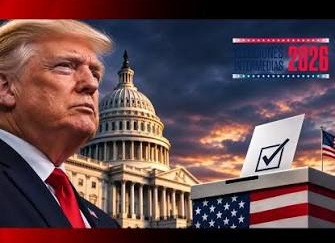
Nunca me lo hubiera imaginado. Durante las últimas semanas me he encontrado con varios corresponsales extranjeros de España, Francia y México que vinieron a Estados Unidos a escribir las crónicas del fin del imperio. Un poco sorprendido les pregunté cómo veían a Estados Unidos desde fuera e inequívocamente me contaron que parece ser un país que se autodestruye.
¿Estados Unidos ya es una dictadura?
Esa es la pregunta que se hacen. Con la segunda llegada de Donald Trump a la presidencia, ellos creen que la democracia estadounidense se ha ido ahogando y que han surgido preocupantes señales de autoritarismo. Y son estas:
Trump acumula cada vez más poder, desde el control del congreso, el ejército y la mayoría en la corte suprema de justicia hasta la obediencia de empresarios, grandes corporaciones y antiguos opositores políticos
2) El miedo -y a veces el terror- se ha apoderado del país. Ya no se puede confiar en las leyes ni en las cortes. Trump parece hacer lo que se le pega la gana sin tener ninguna consecuencia.
3) Ha surgido una especie de policía secreta, que actúa con total impunidad, sin identificarse, enmascarada y con armas de guerra. Los agentes migratorios de ICE ya mataron a dos ciudadanos de Estados Unidos -Renee Good y Alex Pretti-, están arrestando a cientos de miles de inmigrantes sin récord criminal y separando a padres de sus hijos. Nadie se salva; un niño de cinco años -Liam Conejo Ramos- fue detenido por la migra y un bebé de dos meses con pulmonía -Juan Nicolás- fue deportado a México.
4) Crecen los ataques a la prensa, a profesores, jueces y a políticos de oposición. Y críticos al presidente -como el periodista Don Lemon- o que se burlan de él -como los comediantes Stephen Colbert y Jimmy Kimmel- han sido demandados o suspendidos. Muchos seguidores de Trump se han dedicado a publicar mentiras o conspiraciones, como que él ganó las elecciones del 2020. Y el lenguaje presidencial es cada vez más burdo, como llamarle “basura” a la gente de Somalia, o presentar en su cuenta de redes sociales a Barack y Michelle Obama como animales.
5) Y hacia fuera, Trump -como el comandante en jefe del poderío nuclear estadounidense- pretende apropiarse de otros países (como Groenlandia), interviene en otros (como Venezuela) y amenaza con operaciones militares en México, Colombia, Panamá y Cuba. Se
acabaron las alianzas. Su política de aranceles a nivel mundial le ha ganado a Estados Unidos la enemistad del planeta entero. El ogro se está quedando solo.
Para que Estados Unidos se convirtiera en una dictadura tendría que romperse el sistema de elecciones -que ahora Trump quiere
nacionalizar- y el ejército volcarse contra la población. Eso no ha ocurrido. Pero las democracias caen de muchas maneras y no hay una sola secuencia. Por eso es tan peligroso lo que ocurre en la nación. De esto se ha escrito mucho. Escojo solo dos citas.
“Podríamos caer en la tentación de creer que nuestra herencia democrática automáticamente nos protege de las amenazas” escribió Tymothy Snyder en su excelente y corto libro On Tyranny[i]. “Pero este es un reflejo equivocado”. No deja de sorprender que un país como Estados Unidos, que el próximo cuatro de julio cumplirá 250 años de democracia, corra el peligro del convertirse en un régimen autoritario. La razón está en que Estados Unidos tiene muchas contradicciones internas.
“Estados Unidos es una nación muy heterogénea que aparentemente tiene considerables fuentes de animosidad racial”, dijo Karen Stenner en su libro The Authoritarian Dynamic[ii]. Stenner sugiere que Estados Unidos no ha sabido manejar la “tolerancia y respeto por las diferencias” en una nación tan diversa, multiétnica y multicultural. Y por eso se está rompiendo por dentro.
A mis amigos en el extranjero les digo que sí veo aquí graves señales de autoritarismo pero que yo no creo, todavía, que Estados Unidos sea una dictadura. Nadie me meterá a la cárcel por escribir esta columna y veo señales de resistencia en todos lados, desde las protestas ciudadanas en Minneapolis y Los Ángeles, que me tocó presenciar, hasta el extraordinario y diverso espectáculo de Bad Bunny en el medio tiempo del Super Bowl. A cada bravuconada de Trump hay una respuesta y eso mantiene viva la democracia.
Cuando decidí venirme a vivir a Estados Unidos en 1983, México todavía no era una democracia. Y recuerdo que al llegar a Los Angeles vi cómo los periodistas cuestionaban y criticaban al presidente Ronald Reagan, y no pasaba nada. “Yo quiero vivir en este país”, pensé. Y me quedé. Pero no estoy dispuesto, nunca más, a vivir en un régimen autoritario como en el que viví durante mi adolescencia en México.
La forma de hacerlo es no quedarse callado. La periodista Maria Ressa, ganador del Nobel de la Paz, lo dijo mejor que nadie en su libro How To Stand Up To A Dictator[iii]: “Nunca, nunca, nunca, aceptes ser intimidado por alguien, no importa quien sea”.
CHRONICLES OF THE END OF THE EMPIRE
I never would have imagined it. Over the past few weeks, I’ve met with several foreign correspondents from Spain, France, and Mexico who came to the United States to write chronicles of the end of the empire. Somewhat surprised, I asked them how they saw the United States from the outside, and they unequivocally told me that it seems to be a country that is self-destructing.
Is the United States already a dictatorship?
That’s the question they’re asking. With Donald Trump’s second term as president, they believe that American democracy has been suffocating and that worrying signs of authoritarianism have emerged. And these are:
1) Trump is accumulating more and more power, from control of Congress, the military, and a majority on the Supreme Court to the obedience of business leaders, large corporations, and former political opponents.
2) Fear—and sometimes terror—has gripped the country. The laws and the courts can no longer be trusted. Trump seems to do whatever he pleases without any consequences.
3) A kind of secret police force has emerged, acting with total impunity, unidentified, masked, and armed with weapons of war. ICE immigration agents have already killed two U.S. citizens—Renee Good and Alex Pretti—and are arresting hundreds of thousands of immigrants with no criminal record and separating parents from their children. No one is safe; a five-year-old boy—Liam “Conejo” Ramos—was detained by immigration authorities, and a two-month-old baby with pneumonia—Juan Nicolás—was deported to Mexico.
4) Attacks on the press, teachers, judges, and opposition politicians are increasing. And critics of the president—like journalist Don Lemon—or those who mock him—like comedians Stephen Colbert and Jimmy Kimmel—have been sued or suspended. Many Trump supporters have dedicated themselves to publishing lies and conspiracy theories, such as his claim that he won the 2020 election. And the president’s language is becoming increasingly crude, like calling the people of Somalia “trash,” or portraying Barack and Michelle Obama as animals on his social media accounts.
5) Externally, Trump—as commander-in-chief of the American nuclear arsenal—intends to seize other countries (like Greenland), intervenes in others (like Venezuela), and threatens military operations in Mexico, Colombia, Panama, and Cuba. Alliances are over. His global
tariff policy has earned the United States the enmity of the entire planet. The ogre is becoming increasingly isolated.
For the United States to become a dictatorship, the electoral system—which Trump now wants to nationalize—would have to collapse, and the military would have to turn against the population. That hasn’t happened. But democracies fall in many ways, and there isn’t a single sequence. That’s why what’s happening in the nation is so dangerous. Much has been written about this. I will choose just two quotes.
“We might be tempted to believe that our democratic heritage automatically protects us from threats,” wrote Timothy Snyder in his excellent and short book, *On Tyranny*. “But this is a misconception.” It is surprising that a country like the United States, which will celebrate 250 years of democracy this coming July 4th, is in danger of becoming an authoritarian regime. The reason is that the United States has many internal contradictions.
“The United States is a very heterogeneous nation that apparently has considerable sources of racial animosity,” said Karen Stenner in her book *The Authoritarian Dynamic*. Stenner suggests that the United States has not been able to manage “tolerance and respect for differences” in such a diverse, multiethnic, and multicultural nation. And that is why it is breaking down from within.
To my friends abroad, I say that I do see serious signs of authoritarianism here, but I don’t yet believe that the United States is a dictatorship. No one will throw me in jail for writing this column, and I see signs of resistance everywhere, from the citizen protests in Minneapolis and Los Angeles, which I witnessed, to Bad Bunny’s extraordinary and diverse Super Bowl halftime show. Every act of bravado by Trump is met with a response, and that keeps democracy alive.
When I decided to move to the United States in 1983, Mexico was not yet a democracy. And I remember arriving in Los Angeles and seeing how journalists questioned and criticized President Ronald Reagan, and nothing happened. “I want to live in this country,” I thought. And I stayed. But I am not willing, ever again, to live under an authoritarian regime like the one I experienced during my adolescence in Mexico.
The way to do this is not to remain silent. The journalist Maria Ressa, winner of the Nobel Peace Prize, said it better than anyone in her book How to Stand Up to a Dictator: “Never, never, never accept being intimidated by anyone, no matter who he is”.
About the Author